
The Psychological Tension Behind “Why Did the Chicken Cross the Road?”
In the world of humor, few phrases are as ubiquitous and iconic as the classic joke: “Why did the chicken cross the road?” This seemingly simple question has evolved into a cultural phenomenon, prompting countless interpretations, spin-offs, and even debate. The tension inherent in this joke captures the essence of decision-making, humor, and even the dynamics of risk-taking. In fact, this concept reminds us of the thrilling nature of games, such as the Chicken Cross The Road tension Chicken Cross The Road casino game, where the stakes and the choices create a palpable tension that enhances the experience.
At first glance, the joke appears straightforward. The answer, “To get to the other side,” does little to elicit laughter, reinforcing the idea that the tension lies not in the punchline but in the buildup and the expectation we bring to the question. This ambiguity invites the audience to engage more deeply. It becomes a moment of reflection, where the mind races through possibilities, searching for humor in a seemingly mundane scenario. This first layer of tension builds anticipation and expectations, setting the stage for further explorations into why humor often thrives in the realm of surprise and unpredictability.
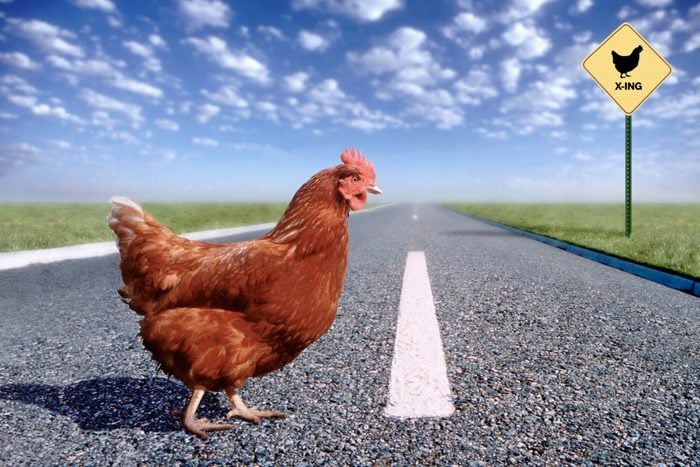
The second layer of tension emerges from the cultural and psychological implications of the chicken’s journey. What does crossing the road symbolize? Is it a metaphor for life choices, risks, and the desire for escape or freedom? The chicken’s action can be seen as an allegory for the individual’s struggle against societal norms and expectations. In this light, we recognize the chicken not just as a character in a joke but as a representation of the universal quest for change. This existential layer adds depth to the simple question and enriches our understanding of humor as a vehicle for exploring life’s complexities.
As we delve deeper, we discover that the joke also touches on the concept of absurdity. The idea of a chicken navigating a road is inherently ridiculous. This absurdity is a rich source of tension, as it forces the audience to confront the mundane aspects of life through the lens of the absurd. Humor often thrives at the intersection of what is expected and what is not. This juxtaposition challenges our perceptions and invites us to rethink what we find funny. It reflects how humor can serve as a coping mechanism, allowing us to laugh at the unpredictability of existence.
Moreover, in exploring the psychology of tension within this joke, we must consider the social context in which it is told. Jokes often serve to connect us through shared experiences and cultural references. The tension also arises from the social dynamics at play—how an audience might react differently based on their backgrounds, values, and shared understandings. Thus, the chicken’s crossing becomes a collective experience, with each listener bringing their own interpretations and expect

ations. This communal aspect adds a layer of richness to the narrative, as the joke morphs and evolves across different social circles, often taking on new meanings in the process.
Humor acts as a social glue, and when tension is introduced, it has the power to strengthen bonds among individuals. Within a group setting, the collective laughter that follows the punchline can foster a shared sense of joy, alleviating stress and promoting social cohesion. Similarly, the tension in the joke, paired with the subsequent release of laughter, beautifully demonstrates our human need for connection and belonging. This dynamic reflects the psychological principles underpinning why we seek out humor, especially in shared experiences that provoke tension.
Transitioning from the world of humor into the realm of gaming, we can see parallels in the idea of tension and decisions. Just as the chicken crosses the road, players in a game make choices that invoke tension and excitement. The uncertainty of outcomes in games can mirror the unpredictability of our own choices in life. The Chicken Cross The Road casino game encapsulates this relationship perfectly. Every bet, every spin, every moment of anticipation creates a thrilling experience that resonates deeply with our innate desire to take risks and navigate challenges.
Within the context of gaming, tension acts as a crucial element in enhancing engagement. Players are drawn to the uncertainty that comes with risk-taking, much like the tension we feel when we overhear the classic joke. The stakes are raised as players weigh their decisions, pondering the potential rewards against the perils of loss. This mirrors the moral quandaries posed by the chicken’s journey—do we take the leap? Do we cross the road, stepping into the unknown, all for the potential rewards that lie on the other side?
Tension’s impact on decision-making in gaming can also lead to interesting discussions surrounding strategy and psychology. Just as the audience grapples with the joke’s implications, players analyze risk versus reward, assessing the probabilities and strategizing their next move. In both scenarios, we see that tension transforms ordinary moments into extraordinary ones, enriching our experiences and interactions.
In conclusion, the weight of tension present in the seemingly simple phrase, “Why did the chicken cross the road?” extends far beyond a mere joke. It encapsulates the intricacies of decision-making, absurdity, and social connections. The chicken’s journey invites us to confront existential themes, engage in discussions on humor, and explore the captivating world of gaming. It serves as a testament to our shared human experience and the myriad factors that influence how we perceive and interact with the world—a road that many are willing to cross, one joke and one game at a time.
As we continue to share and answer this timeless question, we keep alive the tension and excitement of life’s possibilities, encouraging us all to take our own journeys to the other side.